Digital Transformation in Retail: Complete Guide for 2025
The retail landscape is experiencing its most dramatic shift since the advent of e-commerce. By 2025, the global digital transformation market in retail is projected to reach $859 billion, nearly tripling from $305 billion in 2024. This isn’t just about adopting new technologies—it’s about fundamentally reimagining how retailers operate, engage customers, and drive growth.
For retail leaders, the message is clear: digital transformation in retail has moved from competitive advantage to survival necessity. With consumer expectations evolving rapidly and new technologies reshaping entire industries, retailers must act decisively to remain relevant in an increasingly digital-first marketplace.
This comprehensive guide reveals everything you need to know about retail digital transformation in 2025, from core technologies and implementation strategies to real-world success stories and emerging trends that will define the future of retail.
What is Digital Transformation in Retail?
Digital transformation in retail represents far more than simply adding technology to existing operations. It’s the comprehensive integration of digital technologies to revolutionize retail operations and customer experiences across every touchpoint of the business.

At its core, retail digital transformation involves injecting new technologies into retail organizations to improve existing processes and enable entirely new business activities. The key difference from basic digitization lies in scope: while digitization might involve adding an online store or implementing a new point-of-sale system, digital transformation requires retailers to fundamentally rethink their business models, customer engagement strategies, and operational frameworks.
The 2025 market landscape reflects this shift. The global digital transformation market in retail is projected to reach $859 billion, up from $305 billion in 2024—a staggering increase that demonstrates how seriously the retail industry is taking this transformation. This investment spans across digital commerce platforms, artificial intelligence systems, IoT devices, and advanced analytics platforms that collectively reshape how retailers function.
Digital transformation enables retailers to achieve three core focus areas: customer experience enhancement through personalized interactions and omnichannel consistency, operational efficiency via automated processes and data-driven decision making, and advanced data analytics that provide real-time insights into customer behavior, inventory levels, and market trends.
Unlike traditional technology adoption that often occurs in silos, successful digital transformation creates an interconnected ecosystem where customer data flows seamlessly between online and offline channels, inventory management systems communicate with demand forecasting algorithms, and customer interactions inform personalized marketing campaigns across all digital channels.
Why Retailers Must Transform Digitally in 2025
The urgency surrounding retail digital transformation isn’t driven by technology trends alone—it’s fueled by fundamental shifts in consumer behavior, market dynamics, and competitive pressures that make transformation essential for survival.
E-commerce growth continues to accelerate at an unprecedented pace. By 2025, e-commerce is expected to account for 23% of total U.S. retail sales, up from just 15% in 2021. This represents more than incremental growth—it’s a fundamental redistribution of retail activity that requires retailers to excel in digital channels or risk losing significant market share to competitors who can.
Consumer behavior has shifted permanently toward digital-first expectations. Today’s consumers—representing 2.2 billion people who shop online globally—interact with an average of 6 touchpoints before making a purchase decision. They expect seamless experiences whether they’re browsing on their mobile device during their commute, researching products online, or visiting physical stores. Retailers who cannot deliver this integrated experience find themselves at a significant disadvantage.
The competitive landscape reflects these changing dynamics. Leading retailers are investing heavily in digital transformation efforts, with companies allocating an average of 7.5% of their total revenue—approximately $17.7 billion for large retailers—specifically to digital transformation initiatives. This level of investment creates a competitive gap that becomes increasingly difficult to close as digital leaders continue advancing their capabilities.
The post-pandemic era accelerated these trends beyond what many industry experts predicted. What began as emergency measures to maintain operations during lockdowns became permanent shifts in consumer expectations and retail operations. The companies that adapted quickly gained significant advantages, while those that delayed transformation found themselves struggling to catch up in an increasingly digital marketplace.
Mobile commerce dominance adds another layer of urgency. By 2028, mobile devices are expected to generate 63% of all e-commerce sales. This means retailers must not only excel in digital channels but also specifically optimize their mobile experiences to capture this growing segment of consumer spending. Physical stores remain important, but they’re increasingly becoming part of a broader omnichannel ecosystem rather than standalone retail destinations.
Core Technologies Driving Retail Transformation
The technological foundation of retail digital transformation rests on several interconnected technologies that work together to create new capabilities and business opportunities. Understanding these key technologies and their applications helps retail leaders prioritize investments and develop comprehensive transformation strategies.
1. Artificial Intelligence and Machine Learning
Artificial intelligence stands at the forefront of retail transformation, with AI spending in the retail industry projected to grow from $5 billion in 2022 to $31 billion by 2028. This dramatic increase reflects AI’s proven ability to drive measurable business results across multiple retail functions.
Machine learning algorithms excel at analyzing vast amounts of customer data to deliver personalized customer experiences at scale. Amazon pioneered this approach and continues leading the market—their AI-powered recommendation engine now drives 35% of their total sales, demonstrating the revenue impact of well-implemented AI systems. These systems analyze customer purchase history, browsing behavior, and preferences to suggest products that customers are most likely to purchase.
Demand forecasting represents another critical AI application. Advanced algorithms can process historical sales data, seasonal patterns, market trends, and external factors like weather or economic conditions to predict future demand with remarkable accuracy. This enables retailers to optimize inventory levels, reduce stockouts, and minimize excess inventory that ties up capital.
Dynamic pricing algorithms allow retailers to adjust prices in real-time based on factors including competitor pricing, inventory levels, demand patterns, and customer behavior. This capability helps retailers maximize revenue while remaining competitive in rapidly changing market conditions.
Conversational AI and chatbots are transforming customer service operations. Modern AI systems can handle complex customer inquiries, process returns, provide product recommendations, and escalate issues to human agents when necessary. This improves customer satisfaction while reducing operational costs and allowing human staff to focus on higher-value activities.
The implementation timeline for AI in retail is accelerating rapidly. According to recent surveys, 91% of retail IT leaders plan to deploy AI technologies by 2026, indicating widespread recognition of AI’s transformative potential across the retail sector.
2. Internet of Things (IoT) and Smart Devices
IoT technology creates the physical infrastructure that enables retail automation and real-time data collection. Smart sensors, RFID tags, and connected devices transform traditional retail environments into intelligent ecosystems that can monitor, analyze, and respond to changing conditions automatically.

Real-time inventory tracking represents one of IoT’s most impactful applications. RFID tags and smart sensors enable retailers to monitor inventory levels continuously, automatically triggering reorders when stock runs low. This technology can reduce shrinkage by up to 45% while saving individual stores more than 3,000 hours annually through automated inventory management processes.
Smart shelves equipped with weight sensors and cameras can detect when products are removed and automatically update inventory systems. These systems can also monitor product placement, detect when items are misplaced, and alert store associates when restocking is needed.
Connected devices throughout the supply chain provide end-to-end visibility that was previously impossible. IoT sensors can track shipments in real-time, monitor temperature and humidity for sensitive products, and provide alerts when deliveries are delayed or compromised. This level of supply chain transparency enables retailers to proactively address issues before they impact customer experience.
In-store IoT devices also enhance the customer experience directly. Smart mirrors in fitting rooms can suggest complementary items, beacon technology can provide personalized offers based on customer location within stores, and mobile apps can integrate with IoT systems to provide real-time product information and availability.
3. Augmented Reality (AR) and Virtual Reality (VR)
The AR and VR retail market is projected to reach $12.6 billion by 2025, driven by technologies that bridge the gap between physical and digital shopping experiences. These immersive technologies address one of retail’s biggest challenges: helping customers make confident purchase decisions without physically interacting with products.
Virtual try-on capabilities represent the most successful AR application in retail. Customers can use their smartphones or in-store devices to see how clothing, makeup, or accessories will look before making a purchase. This technology significantly reduces return rates while increasing customer confidence in their purchase decisions.
IKEA’s success with its IKEA Place app demonstrates AR’s potential. The app allows customers to visualize furniture in their actual living spaces using their smartphone cameras. This capability helps customers make better decisions about size, color, and style while reducing the uncertainty that often leads to returns or delayed purchases.
Oakywood, a retailer of wooden accessories and furniture, increased its sales by 250% after implementing Shopify’s AR technology. The AR features allowed customers to see products in their own environments, leading to higher conversion rates and reduced return rates.
In-store navigation and product information enhancement through AR helps customers find products more easily and access detailed information by pointing their devices at items. This technology improves the in-store experience while providing retailers with data about customer interests and shopping patterns.
VR technology is beginning to enable entirely new shopping experiences, including virtual showrooms where customers can explore products in simulated environments and virtual shopping assistants that can guide customers through complex product selections.
4. Cloud Computing and Data Analytics
Cloud computing provides the scalable infrastructure foundation that supports omnichannel retail operations. Modern retail operations generate enormous amounts of data from multiple touchpoints, and cloud platforms provide the computational power and storage capacity needed to process this information effectively.
Real-time customer data unification across all touchpoints represents one of cloud computing’s most valuable capabilities. When customer data from physical stores, e-commerce platforms, mobile apps, and customer service interactions is integrated in real-time, retailers can provide truly personalized experiences regardless of how customers choose to interact with their brand.
Predictive analytics platforms hosted in the cloud enable sophisticated demand planning and inventory management. These systems can process data from hundreds of variables to predict demand patterns, optimize inventory allocation across locations, and identify emerging trends before they become obvious to competitors.
Advanced analytics capabilities help retailers understand customer behavior patterns, identify high-value customer segments, and optimize marketing campaigns for maximum effectiveness. This data-driven approach to marketing and customer engagement delivers significantly better results than traditional mass marketing approaches.
Cloud platforms also enable cost optimization in retail operations. Studies show that retailers can achieve up to 22% reduction in total ownership costs by moving to cloud-based infrastructure, while gaining access to capabilities that would be prohibitively expensive to implement and maintain in-house.

Key Benefits of Digital Transformation in Retail
The benefits of retail digital transformation extend far beyond technology implementation, creating tangible improvements in customer satisfaction, operational efficiency, and business performance that directly impact the bottom line.
Enhanced Customer Experience and Loyalty
Digital transformation fundamentally changes how customers interact with retail brands, creating opportunities for personalized experiences that build stronger relationships and drive increased loyalty.
Modern consumers, particularly Gen Z and Millennials, expect high-quality digital experiences. Research shows that 75% of these consumers expect seamless, personalized interactions across all channels. Digital transformation enables retailers to meet these expectations through sophisticated customer data analysis and real-time personalization capabilities.
Omnichannel consistency represents a critical component of enhanced customer experience. Customers who engage with retailers through multiple channels spend four times more than single-channel customers. Digital transformation creates the technical infrastructure and operational processes needed to deliver consistent pricing, product information, and service quality, whether customers shop online, through mobile apps, or in physical stores.
Personalized customer experiences drive significant improvements in customer retention and lifetime value. AI-powered recommendation engines can increase average order values by suggesting relevant products based on customer purchase history and behavior patterns. These systems continuously learn and improve, becoming more effective over time.
Customer service improvements through digital tools create additional value. When store associates have access to complete customer information, including online browsing history and previous purchases, 90% provide better service according to recent studies. This enhanced service capability translates directly into improved customer satisfaction and increased sales.
Target’s success with AR-powered voucher campaigns demonstrates the potential impact. Their AR applications achieved an 86% voucher redemption rate, significantly higher than traditional promotional campaigns, while providing customers with engaging, interactive experiences that strengthen brand connection.
Operational Efficiency and Cost Reduction
Digital transformation delivers substantial operational improvements that reduce costs while improving service quality across retail operations.
Inventory optimization represents one of the most significant efficiency gains. Advanced analytics and AI-powered demand forecasting can improve logistics performance by 10-40%, reducing both stockouts that disappoint customers and excess inventory that ties up working capital. Real-time inventory visibility across all channels enables retailers to fulfill orders from the optimal location, reducing shipping costs and delivery times.
Automated processes eliminate manual tasks that are both time-consuming and error-prone. Staples Canada provides an excellent example of automation benefits—they save thousands of hours weekly through automated inventory management and ordering processes. These time savings allow staff to focus on customer service and other high-value activities that directly impact sales.
Supply chain processes benefit significantly from digital transformation. IoT sensors and analytics platforms provide real-time visibility into shipment status, delivery schedules, and potential disruptions. This visibility enables proactive problem-solving that prevents issues from impacting customer experience.
Streamline operations through integrated systems, eliminate duplicate data entry, reduce communication delays, and ensure consistent information across all channels. When customer, inventory, and order data are automatically synchronized across systems, retailers can operate more efficiently while reducing errors that create customer frustration.
Mobile self-scanning and automated checkout systems improve operational efficiency while enhancing customer experience. These technologies reduce wait times, optimize labor allocation, and provide retailers with detailed data about customer shopping patterns and preferences.
Revenue Growth and Market Expansion
Digital transformation creates multiple pathways for revenue growth, from improving existing operations to enabling entirely new business models and market opportunities.
Mobile self-scanning technology demonstrates direct revenue impact. Retailers report that customers who use mobile self-scanning generate 50% higher basket volumes compared to traditional checkout methods. This increase comes from improved convenience, reduced wait times, and integrated promotional capabilities that encourage additional purchases.
Global market expansion becomes significantly more achievable through digital commerce platforms. Retailers using sophisticated e-commerce platforms report cross-border revenue growth of up to 433% as they access international markets that were previously too complex or expensive to serve effectively.
Data-driven insights enable more effective marketing and merchandising decisions. According to recent surveys, 93% of retail leaders consider data integration critical to their growth strategies. When retailers can analyze customer behavior across all touchpoints, they can identify trends, optimize product assortments, and create targeted marketing campaigns that deliver significantly better returns than broad-based approaches.
Digital channels also enable new revenue streams. Subscription-based business models, digital product offerings, and personalized services create ongoing revenue opportunities that complement traditional transactional sales.
Customer lifetime value improvements through enhanced experiences and personalized engagement represent another significant revenue driver. When retailers can deliver consistently excellent experiences across all touchpoints, customer retention rates improve, leading to higher lifetime value and reduced customer acquisition costs.
Major Challenges in Retail Digital Transformation
While the benefits of digital transformation are substantial, retailers face significant challenges that must be addressed thoughtfully to ensure successful implementation.
Legacy System Integration and Technical Complexity
Most established retailers operate with fragmented technology systems that evolved over decades. ERP systems, CRM platforms, point-of-sale systems, and e-commerce platforms often operate as separate silos, creating data inconsistencies and operational inefficiencies that hinder transformation efforts.
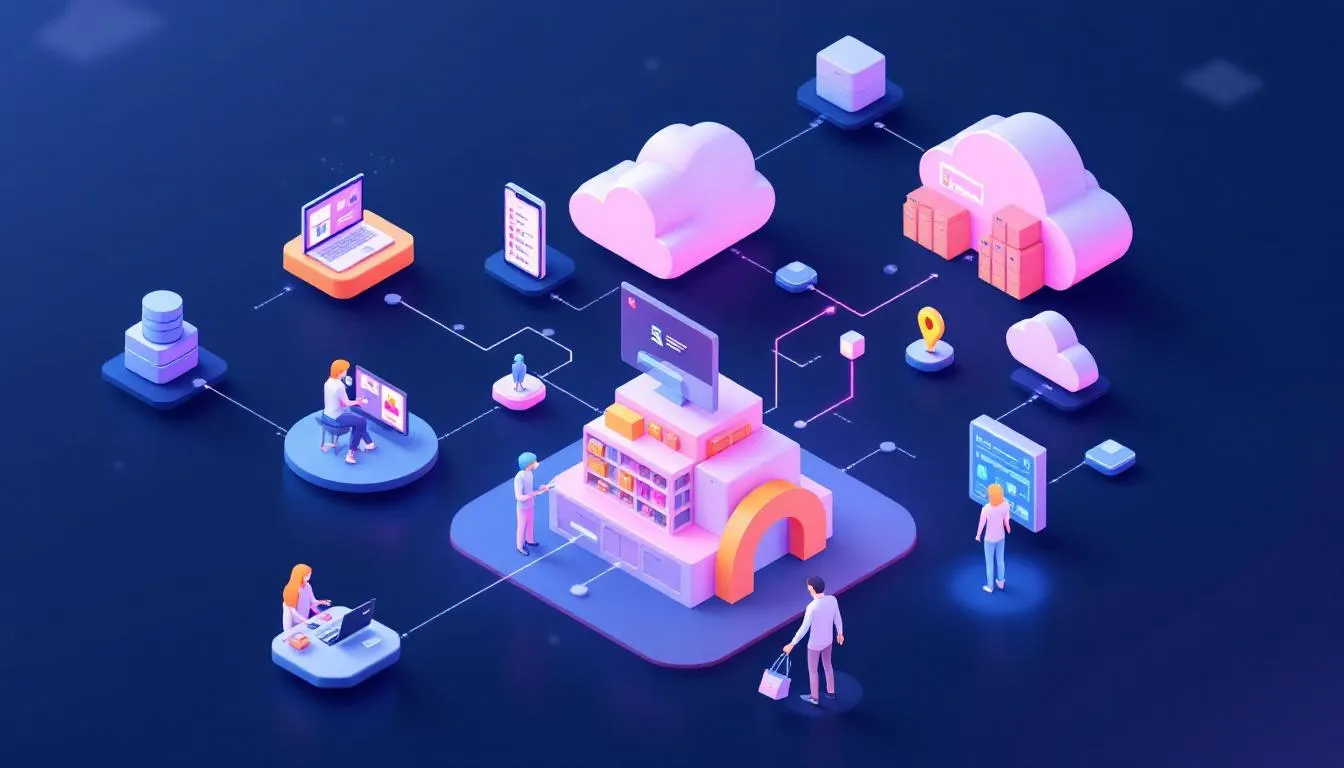
Integration challenges become more complex as retailers add new digital technologies. IoT devices, AI platforms, mobile apps, and analytics tools must communicate effectively with existing systems to deliver the seamless experiences that customers expect. Creating these connections often requires significant technical expertise and careful planning to avoid disrupting ongoing operations.
High maintenance costs for brittle system integrations create ongoing budget pressures. When systems are connected through custom interfaces that require constant maintenance, retailers find themselves spending increasing amounts on keeping existing capabilities running rather than investing in new innovations.
Vendor management complexity increases as retailers work with multiple technology providers. Coordinating updates, managing security protocols, and ensuring compatibility across different systems requires sophisticated technical project management capabilities that many retailers lack internally.
The solution approach involves adopting a phased modernization strategy with API-first architecture. Rather than attempting to replace all systems simultaneously, successful retailers identify priority areas for improvement and implement modern, flexible platforms that can integrate more easily with both existing systems and future technologies.
Organizational Resistance and Change Management
Technology implementation represents only part of the digital transformation challenge. The human element often creates the most significant barriers to successful change.
Staff resistance commonly stems from fear of job displacement or concerns about increased workload demands. When employees worry that new technologies will eliminate their roles or make their work more difficult, they may resist training or fail to adopt new tools effectively. This resistance can undermine even well-planned technology implementations.
According to recent research, 53% of professionals cite insufficient change enablement as the primary barrier to digital transformation success. This indicates that many organizations focus heavily on technical implementation while neglecting the cultural and organizational changes required for transformation success.
Executive resistance to cultural transformation beyond technology creates another significant challenge. Some leadership teams view digital transformation as primarily a technology initiative rather than a comprehensive business transformation that requires changes in decision-making processes, organizational structure, and performance metrics.
Successful change management strategies require inclusive planning that involves employees in transformation planning from the early stages. Clear communication about transformation goals, expected benefits, and how changes will impact individual roles helps reduce anxiety and build support for new initiatives.
Comprehensive training programs ensure that staff have the skills and confidence needed to use new tools effectively. This investment in human capital is essential for realizing the full benefits of digital transformation investments.
Budget Constraints and ROI Measurement
Digital transformation requires significant financial investment across multiple areas, creating budget challenges for many retail organizations.
According to recent surveys, 57% of organizations report insufficient funding for their digital transformation initiatives. The costs extend beyond technology purchases to include implementation services, staff training, system integration, and potential business disruption during transition periods.
Proving return on investment becomes difficult without clear key performance indicators and tracking frameworks. Many retailers struggle to establish metrics that accurately capture transformation benefits, particularly when improvements span multiple business areas and take time to materialize fully.
Complex cost considerations include not only initial technology investments but ongoing expenses for maintenance, training, security, and system updates. These total cost of ownership calculations often reveal higher expenses than initially anticipated, creating budget pressure that can compromise transformation quality.
The recommended approach involves starting with minimum viable product initiatives that demonstrate value quickly and can be scaled successfully. By focusing on specific use cases with clear business metrics, retailers can build internal support and justify additional investments based on proven results.
Phased implementation strategies allow retailers to spread costs over time while learning from initial implementations. This approach reduces risk while enabling continuous improvement and refinement of transformation strategies.
Skills Gap and Talent Shortage
Digital transformation requires capabilities that many retail organizations lack internally, creating significant talent and expertise challenges.
Over 50% of organizations report lacking the internal expertise needed for comprehensive digital transformation. Critical skills include data literacy for analyzing customer and operational information, AI and machine learning expertise for implementing intelligent systems, cybersecurity knowledge for protecting digital assets, and change management capabilities for ensuring successful adoption.
The talent shortage extends beyond technical skills to include strategic capabilities. Understanding how to integrate new technologies with existing business processes, measure transformation success, and adapt organizational culture requires expertise that’s in high demand across industries.
Resource strain across departments occurs when transformation initiatives require time and attention from staff who already have full responsibilities for ongoing operations. This can slow transformation progress while impacting current business performance.
Successful retailers address these challenges through partnerships with technology specialists who can provide expertise and implementation support. These partnerships enable access to specialized knowledge while allowing internal staff to focus on their core responsibilities.
Investing in upskilling programs helps build internal capabilities over time. By training existing employees in new technologies and digital business processes, retailers can develop the capabilities needed for ongoing transformation success while improving employee engagement and retention.
Real-World Examples of Successful Digital Transformation
Learning from retailers who have successfully navigated digital transformation provides valuable insights into effective strategies, implementation approaches, and the tangible results that transformation can deliver.
1. Target: AI-Powered Personalization and POS Integration
Target’s digital transformation demonstrates how established retailers can leverage AI and integrated systems to create competitive advantages while improving customer experience and operational efficiency.
Their transformation of point-of-sale systems into customer intelligence hubs represents a fundamental shift from transactional to relationship-focused retail. Rather than simply processing payments, Target’s modern POS systems provide store associates with complete customer information, including online browsing history, previous purchases, and personalized recommendations. This integration enables associates to provide personalized service that rivals the best online experiences.
Target’s AI-powered personalization engine processes over 100 data factors to deliver real-time, personalized experiences for each customer. This system analyzes customer purchase history, browsing behavior, seasonal patterns, and demographic information to create highly targeted product recommendations and promotional offers. The sophistication of this system enables Target to compete effectively with pure-play digital retailers while leveraging their physical store network as a strategic advantage.
Four consecutive years of improved on-shelf availability demonstrate the operational benefits of Target’s transformation. Their AI systems continuously analyze sales patterns, inventory levels, and demand forecasting to optimize product placement and restocking schedules. This data-driven approach to inventory management ensures that customers find the products they want while minimizing the costs associated with excess inventory.
Target’s seamless omnichannel experience allows customers to shop however they prefer while maintaining consistent pricing, product information, and service quality across all touchpoints. Customers can research products online, check availability at nearby stores, make purchases through their mobile app, and pick up orders at convenient locations—all supported by integrated systems that provide real-time information and smooth handoffs between channels.
2. Walmart: Self-Checkout and Adaptive Retail Vision
Walmart’s approach to digital transformation focuses on leveraging AI and emerging technologies to improve operational efficiency while maintaining their commitment to low prices and customer convenience.
Their AI-powered self-checkout systems represent a sophisticated approach to automated retail that goes beyond simple technology replacement. These systems use computer vision and machine learning to identify products, detect potential theft, and provide assistance when needed. The technology reduces checkout friction for customers while enabling Walmart to reallocate labor from transaction processing to customer service and other high-value activities.
Walmart’s Adaptive Retail strategy demonstrates comprehensive thinking about technology integration. Rather than implementing individual solutions in isolation, they’ve developed an integrated approach using AI, generative AI, and augmented reality technologies to create a cohesive ecosystem that enhances both customer experience and operational efficiency.
Personalized generative AI platforms enable Walmart to create customized content and recommendations at scale. These systems can generate product descriptions, marketing content, and customer communications tailored to individual preferences and shopping patterns. This capability allows Walmart to provide personalized experiences while operating at massive scale.
Their smart substitution system for online orders considers over 100 factors when recommending replacement products. When requested items are unavailable, the system analyzes customer preferences, dietary restrictions, brand loyalties, and purchase history to suggest alternatives that customers are likely to accept. This sophisticated approach to order fulfillment improves customer satisfaction while reducing the operational costs associated with returns and customer service calls.
3. IKEA: AR-Driven Immersive Shopping Experience
IKEA’s digital transformation demonstrates how retailers can use emerging technologies to address specific customer pain points while creating new competitive advantages.
The IKEA Place app represents one of retail’s most successful augmented reality implementations. Using smartphone cameras and AR technology, customers can visualize furniture in their actual living spaces before making purchases. This capability addresses one of furniture retail’s biggest challenges: helping customers make confident decisions about size, style, and fit without bringing large items home first.
IKEA’s AR technology reduces purchase uncertainty by allowing customers to see exactly how products will look in their spaces. This capability is particularly valuable for furniture and home decor, where size, color, and style compatibility are critical factors in customer satisfaction. By providing this visualization capability, IKEA reduces return rates while increasing customer confidence in their purchase decisions.
The technology bridges the gap between digital browsing and physical shopping decisions. Customers often research products online but struggle to make final decisions without seeing items in context. IKEA’s AR capability provides this context while maintaining the convenience of digital shopping, creating a hybrid experience that combines the best aspects of both channels.
Enhanced customer confidence leads to improved conversion rates and streamlined purchase processes. When customers can visualize products accurately before buying, they make decisions more quickly and with greater satisfaction. This reduces the time and uncertainty often associated with large home furnishing purchases while improving overall customer experience.
5. Sephora: Omnichannel Beauty Ecosystem
Sephora’s digital transformation creates an integrated beauty ecosystem that seamlessly connects physical and digital experiences while providing highly personalized service across all touchpoints.
Their Virtual Artist app uses AI and facial recognition technology to enable virtual makeup trials. Customers can use their smartphone cameras to try different products and looks before visiting stores or making online purchases. This technology addresses a key challenge in beauty retail: allowing customers to experiment with products safely and conveniently.
Unified customer profiles across physical and digital touchpoints enable Sephora to provide consistent, personalized service regardless of how customers choose to interact with their brand. Whether customers shop in stores, through mobile apps, or online, their preferences, purchase history, and beauty profile information are immediately available to provide relevant recommendations and service.
Their integrated loyalty program leverages customer data to create personalized experiences that drive both engagement and sales. The program tracks customer preferences, purchase history, and service interactions to provide targeted offers, early access to new products, and customized beauty recommendations that align with individual preferences and needs.
Personalized beauty consultations enhance customer satisfaction by combining human expertise with digital tools. In-store consultants have access to customer data and digital tools that enhance their ability to provide relevant advice and product recommendations. This integration of human service with digital capabilities creates experiences that are both highly personal and technologically sophisticated.
Digital Transformation Trends Shaping Retail in 2025-2026
Understanding emerging trends helps retailers prepare for future opportunities and challenges while making informed decisions about technology investments and strategic priorities.
Generative AI and Conversational Commerce
Generative AI represents the next evolution in artificial intelligence capabilities for retail, enabling new forms of customer interaction and content creation that were previously impossible.
AI chatbots are evolving beyond simple customer service interactions to handle complex inquiries, process returns, provide detailed product recommendations, and even assist with complex purchase decisions. These advanced conversational AI systems can understand context, remember previous interactions, and provide personalized assistance that rivals human customer service representatives.
Personalized product descriptions and marketing content generation enable retailers to create customized communications at scale. Rather than using generic product descriptions for all customers, generative AI can create personalized content based on individual preferences, purchase history, and browsing behavior. This capability allows retailers to provide highly relevant information while operating efficiently at large scale.
Voice commerce integration with smart speakers and mobile devices creates new channels for customer interaction. As voice recognition technology improves and smart devices become more prevalent, retailers must develop capabilities to serve customers who prefer voice-based interactions for research, ordering, and customer service.
Predictive analytics is evolving toward prescriptive recommendations that provide actionable insights rather than just data analysis. Instead of simply reporting what happened or predicting what might happen, AI systems can recommend specific actions that retailers should take to optimize inventory, improve customer experience, or increase sales.
Blockchain for Supply Chain Transparency
Blockchain technology addresses growing consumer demands for transparency, authenticity, and ethical sourcing by providing immutable records of product origins and supply chain processes.
Enhanced product traceability enables retailers to provide customers with detailed information about product origins, manufacturing processes, and supply chain practices. This transparency becomes increasingly important as consumers make purchasing decisions based on environmental impact, labor practices, and product authenticity.
Authenticity verification helps combat counterfeiting and gray market sales that damage brand reputation and customer trust. Blockchain-based verification systems can provide definitive proof of product authenticity, protecting both retailers and customers from fraudulent products.
Early adopters like Nestlé and Walmart are implementing blockchain technology for food safety tracking. These systems enable rapid identification of contaminated products and precise recall capabilities that protect consumer safety while minimizing business disruption.
The technology is expected to see broader adoption as transparency demands increase across categories beyond food safety. Fashion, electronics, and luxury goods retailers are beginning to explore blockchain applications for authenticating products and providing transparency about manufacturing and sourcing practices.
Headless Commerce and API-First Architecture
Headless commerce architecture separates front-end customer experiences from back-end commerce functionality, enabling greater flexibility and faster innovation in customer-facing applications.

Flexible front-end experiences allow retailers to use their preferred technologies for creating customer interfaces while maintaining robust back-end commerce capabilities. This separation enables faster development, easier customization, and better performance across different devices and channels.
Faster website performance and improved search engine optimization rankings result from optimized front-end applications that aren’t constrained by traditional e-commerce platform limitations. Retailers can create highly optimized experiences for specific devices or customer segments while maintaining comprehensive commerce functionality.
Scalable solutions overcome customization limitations that constrain traditional e-commerce platforms. When retailers need specific functionality or unique customer experiences, headless architecture provides the flexibility to implement these requirements without compromising core commerce capabilities.
PittaRosso provides an excellent example of headless commerce benefits. After implementing a headless architecture, they achieved significant improvements in website speed and were able to develop multichannel strategies that would have been difficult with traditional platform constraints.
Sustainable and Social Commerce Integration
Environmental and social considerations are becoming integral to retail digital transformation as consumer values shift toward sustainability and social responsibility.
Environmental impact tracking through IoT sensors and blockchain technology enables retailers to provide detailed information about product carbon footprints, resource consumption, and environmental impact. This data helps environmentally conscious consumers make informed decisions while encouraging more sustainable business practices.
Social media platforms are evolving into direct sales channels rather than just marketing touchpoints. Instagram Shopping, Facebook Marketplace, TikTok Shop, and other social commerce features enable customers to discover and purchase products without leaving their preferred social platforms. Retailers must develop capabilities to manage inventory, process orders, and provide customer service across these diverse channels.
Community-driven product development uses customer feedback and social interaction data to inform product design and merchandising decisions. Retailers can analyze social media conversations, user-generated content, and community feedback to identify trends and preferences that guide product development and marketing strategies.
Circular economy models supported by digital platforms enable retailers to implement product recycling, refurbishment, and resale programs. Digital technologies make it economically viable to track products through multiple lifecycle stages while creating new revenue opportunities from previously discarded items.
How to Start Your Digital Transformation Journey
Beginning a comprehensive digital transformation requires a systematic approach that balances ambition with practical constraints while building capabilities for long-term success.
Assess Current State and Define Clear Goals
The foundation of successful retail digital transformation begins with honest assessment of existing capabilities, infrastructure, and organizational readiness for change.
Evaluate existing technology infrastructure including point-of-sale systems, e-commerce platforms, inventory management systems, and customer relationship management tools. This assessment should identify integration capabilities, performance limitations, security vulnerabilities, and scalability constraints that will impact transformation planning.
Identify specific pain points across customer experience, operational processes, and business performance. Common areas include inventory management accuracy, customer data integration across channels, checkout process efficiency, personalization capabilities, and supply chain visibility. Documenting these challenges provides clear targets for transformation initiatives.
Set measurable objectives that align with business strategy and provide clear success criteria. These might include customer retention rate improvements, revenue growth targets, operational cost reductions, or customer satisfaction metrics. Specific, measurable goals enable progress tracking and ROI demonstration throughout the transformation process.
Benchmark performance against industry standards and direct competitors to understand relative positioning and identify areas where transformation can create competitive advantages. This analysis helps prioritize investments and set realistic expectations for improvement timelines and outcomes.
Develop a Phased Implementation Strategy
Successful digital transformation requires careful planning that balances transformation ambitions with operational realities and resource constraints.
Start with minimum viable product approaches that deliver quick wins while building organizational confidence and capabilities. Focus on specific use cases with clear business benefits and manageable implementation complexity. Early successes create momentum and support for larger transformation initiatives.
Prioritize high-impact, low-risk initiatives first to maximize return on investment while minimizing disruption to ongoing operations. Examples might include implementing mobile point-of-sale systems, introducing basic customer data integration, or deploying simple AI-powered chatbots for customer service.
Plan integration roadmaps for legacy system modernization that minimize disruption while building toward comprehensive transformation goals. This might involve implementing new platforms alongside existing systems initially, then gradually migrating functionality as new capabilities prove successful.
Allocate adequate resources for training, change management, and ongoing support throughout the transformation process. Budget for both technical implementation and the human factors that determine transformation success, including staff training, communication programs, and change management support.
Choose the Right Technology Partners
Selecting appropriate technology partners significantly impacts transformation success, timeline, and long-term capabilities.
Evaluate unified commerce platforms versus best-of-breed solutions based on organizational capabilities, integration requirements, and long-term strategic goals. Unified platforms offer simplicity and built-in integration but may lack specialized capabilities. Best-of-breed solutions provide advanced functionality but require more complex integration management.
Consider total cost of ownership including implementation expenses, ongoing maintenance, training requirements, and future upgrade costs. Initial software licensing represents only part of transformation costs; professional services, staff time, and ongoing support often exceed initial technology investments.
Assess vendor expertise, support quality, and long-term product roadmaps to ensure partners can support both immediate needs and future growth. Look for vendors with retail industry experience, strong customer support reputations, and clear development plans that align with transformation goals.
Look for platforms offering no-code or low-code integration capabilities that enable faster implementation and easier customization. These tools allow retailers to adapt systems to specific requirements without extensive custom development, reducing costs and implementation time while improving flexibility.
Build Internal Capabilities and Change Culture
Sustainable digital transformation requires developing internal capabilities and cultural changes that support ongoing innovation and adaptation.

Invest in employee training for digital tools, data literacy, and customer engagement techniques that enable staff to leverage new capabilities effectively. Comprehensive training programs ensure that technology investments deliver their full potential while improving employee confidence and job satisfaction.
Establish cross-functional teams that break down organizational silos and enable coordinated decision-making across departments. Digital transformation often requires collaboration between IT, marketing, operations, and customer service teams that traditionally operated independently.
Implement agile methodologies for rapid prototyping, testing, and iteration of new capabilities. Agile approaches enable faster learning and adaptation while reducing the risks associated with large-scale technology implementations.
Create governance frameworks for measuring transformation success and return on investment. Establish clear metrics, reporting processes, and review schedules that enable continuous monitoring and course correction throughout the transformation journey.
Digital transformation in retail represents both a significant opportunity and an essential requirement for competitive success in 2025 and beyond. The retailers who approach transformation strategically, with clear goals and systematic implementation plans, will create sustainable competitive advantages while delivering exceptional customer experiences.
The question isn’t whether to transform, but how quickly you can begin building the capabilities that will define retail success in the digital age. Start by assessing your current state, defining clear objectives, and taking the first steps toward a more digital, customer-centric, and efficient retail operation.
What should you do next?
Thanks for reading till the end. Here are 3 ways we can help you automate your business:

Do better workflow automation with Cflow
Create workflows with multiple steps, parallel reviewals. auto approvals, public forms, etc. to save time and cost.

Talk to a workflow expert
Get a 30-min. free consultation with our Workflow expert to optimize your daily tasks.

Get smarter with our workflow resources
Explore our workflow automation blogs, ebooks, and other resources to master workflow automation.